
Key Takeaways
🔒 Mortgage websites handle highly sensitive borrower data—security is non-negotiable
⚙️ Key features like SSL, daily backups, and firewalls are essential
🛡️ Compliance with data privacy laws (like GLBA and GDPR) protects you legally
📉 Data breaches can cost mortgage professionals thousands and their reputations
💼 Mortgage Website Security builds trust with clients and boosts SEO
🧰 You don’t need to be a tech expert platforms like GetMortgageWebsite.com handle security for you
Why Security is Now Non-Negotiable
Here’s the thing: today’s borrowers are smarter than ever. They check reviews. They Google you. They notice when your site feels sketchy or insecure. If your website loads slowly, lacks an HTTPS padlock, or asks for sensitive info without encryption, most users will bounce faster than you can say “pre-approval.”
Cyberattacks are not just a big business problem. In fact, 43% of cyberattacks target small businesses, including mortgage professionals, brokers, and independent loan officers. And if you think your business is too small to be noticed, you might be the perfect target.
Let that sink in.
Common Website Weak Spots That Put You at Risk
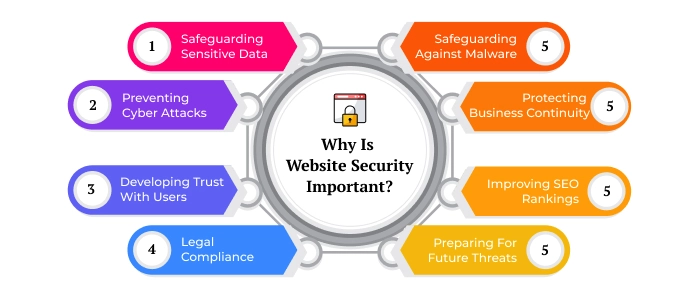
No SSL certificate
Outdated or unsupported CMS (Content Management System)
Weak login credentials (e.g., admin/admin123)
Unprotected online forms or application fields
Third-party plugins with known vulnerabilities
Lack of website backups or restores
If your site checks even one of these boxes, it’s time for a serious upgrade.
Want to simplify your mortgage journey?
Explore tools, calculators, and homebuyer content at GetMortgageWebsite.com.
Must-Have Security Features for Mortgage Websites
🔒 SSL Certificate
Every secure site starts with SSL certificate. It encrypts the connection between your users and your server, ensuring that sensitive data (like loan applications or email addresses) are not intercepted.
Check your URL. Does it start with https://? If not, that’s red flag #1.
SSL is not only crucial for security but also boosts your Google ranking. Without it, your site might be labeled as “Not Secure” by browsers and that’s a trust killer.
🛡️ Firewall Protection
♻️ Daily Backups
Backups are your safety net. If your website is compromised, you can restore it to a previous version with minimal downtime. Choose a platform that automatically backs up your site daily.
Platforms like GetMortgageWebsite.com include daily backups with all plans.
⚠️ Malware Scanning
Just like you scan your PC for viruses, your website should be scanned for malware regularly. This helps detect issues before they spiral out of control.
🤝 Two-Factor Authentication (2FA)
Passwords alone aren’t enough. With 2FA, even if someone steals your login credentials, they won’t get in without your phone or email verification.
 Secure Form Submissions
Especially for mortgage websites, your forms need extra protection. Use tools that support reCAPTCHA, input validation, and encrypted submissions.
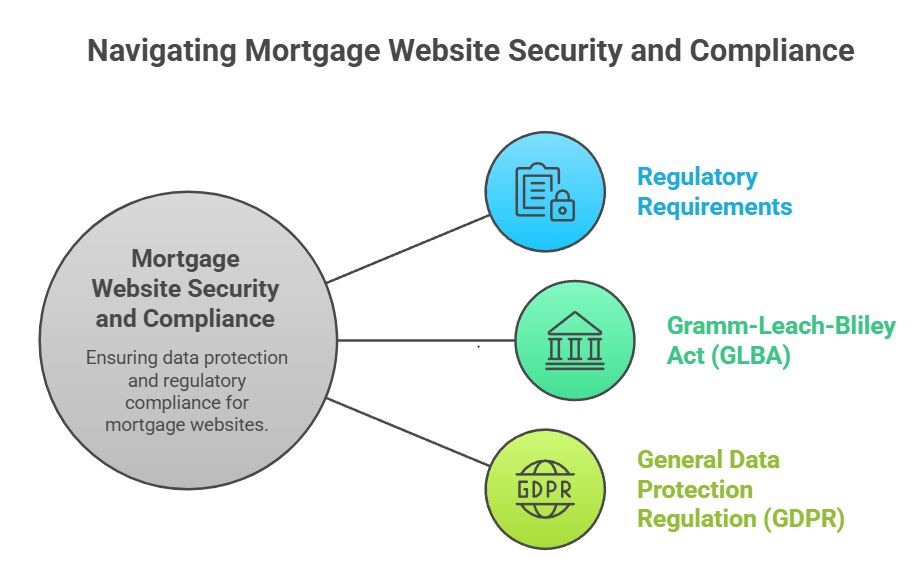
Mortgage Website Security Is Also About Compliance
1. Gramm-Leach-Bliley Act (GLBA)
If you’re a U.S.-based mortgage lender, broker, or financial service provider, the GLBA applies to you. This federal law mandates that financial institutions:
- Implement strong safeguards to protect consumers’ nonpublic personal information (NPI)
- Clearly explain their data-sharing practices to clients
- Ensure that any third-party service providers they work with also comply with data protection standards
Non-compliance can result in enforcement actions from the Federal Trade Commission (FTC) and steep monetary penalties, especially if a data breach occurs due to negligence or outdated security protocols.
2. General Data Protection Regulation (GDPR)
Even if your mortgage business operates primarily in the United States, the GDPR could still apply if you serve or market to clients in the European Union or the European Economic Area. This regulation focuses on giving users control over their personal data and requires businesses to:
- Obtain clear and affirmative consent before collecting personal information
- Offer transparent privacy policies
- Allow individuals to request deletion or correction of their data
- Notify affected users promptly in the event of a data breach
How Mortgage Website Security Impacts Your Business
1. Search Visibility & SEO Ranking
Search engines like Google prioritize secure websites. If your mortgage site lacks HTTPS (SSL certificate), it may be flagged as “Not Secure” and pushed down in search results—reducing your organic visibility and traffic.
2. Client Trust & Lead Confidence
Security signals like SSL, trust badges, and encrypted forms tell visitors their data is safe. This builds trust, especially for financial transactions, increasing the likelihood they’ll complete a lead form or application.
3. Reputation & Brand Protection
A single data breach can trigger negative reviews, news coverage, and loss of credibility. Investing in website security is a proactive way to protect your brand’s reputation and avoid costly PR disasters.
4. Higher Lead Retention & Conversions
When users feel secure, they stay longer and interact more. A secure site helps reduce bounce rates, improves form submissions, and boosts conversions—especially on mobile and tablet devices.
How to Secure Your Mortgage Website Step-by-Step
- Install an SSL Certificate: Mandatory for all professional websites.
- Enable a Firewall: Use a tool like Cloudflare or Sucuri.
- Set Up Daily Backups: Cloud storage is ideal.
- Scan for Malware Weekly: Many hosts include this feature.
- Use Secure Forms: Especially for 1003 loan application forms.
- Update CMS/Plugins: Outdated code is hacker heaven.
- Limit Login Attempts: Protects against brute force attacks.
- Enable Two-Factor Authentication (2FA): Adds an extra layer of login security.
Launch Your Mortgage Website Fast
Showcase reviews, capture leads, and grow your business all in one place.

Frequently Asked Questions
Do I need to hire a developer to secure my mortgage site?
No, not if you use a platform like GetMortgageWebsite.com that handles security for you.
What is the SSL padlock in my browser?
That shows your site is encrypted—essential for data protection and SEO.
How often should I back up my site?
Daily backups are ideal to prevent data loss.
Can hackers steal mortgage applications?
Yes, if your site lacks encryption or has insecure forms.
How does Mortgage Website Security affect SEO?
Secure sites rank better and load faster, improving SEO performance.
Can I use automation for past clients too?
Definitely. Set up check-ins, review requests, or refinance reminders.
How do I know if my forms are secure?
Check if your form provider offers encryption. All forms from GetMortgageWebsite are secure.
What platform should I use?
GetMortgageWebsite.com is built specifically for mortgage professionals with top-notch security baked in.
Conclusion
Mortgage website security isn’t just a technical concern; it’s the foundation of your online credibility and business survival. With rising threats, borrower expectations, and compliance demands, it’s crucial to lock down your digital presence.
Luckily, you don’t need to become an IT expert to stay safe. Platforms like GetMortgageWebsite.com offer peace of mind, performance, and protection—all in one place.
🔒 Stay safe. Stay ahead. And keep closing loans confidently.
Skip the Tech Headaches
We handle the website. You focus on loans.
🔒 Secure, backed up, and mortgage calculators