

If you’re an independent loan officer, your website isn’t just a digital business card — it’s your first impression, your credibility builder, and your 24/7 lead generator.
Most borrowers will Google you before they ever call or text. And in those first few seconds, they decide whether you look trustworthy, professional, and knowledgeable or not.
The right mortgage website template can make that decision easy for them.
This guide walks you through what makes the best website templates stand out, what features actually convert visitors into leads, and how to choose a template that supports your growth not holds you back.
Key Takeaways
- A strong mortgage website builds instant trust and credibility
- Mobile-first design is no longer optional
- Built-in calculators and applications increase engagement
- SEO-ready structure helps you rank in local searches
- The best Mortgage Website Templates are designed specifically for loan officers, not generic businesses
- Clear calls to action dramatically increase lead capture
Why Independent Loan Officers Need a Professional Website
As an independent loan officer, you don’t have the built-in brand recognition of a big bank. Your personal brand is everything.
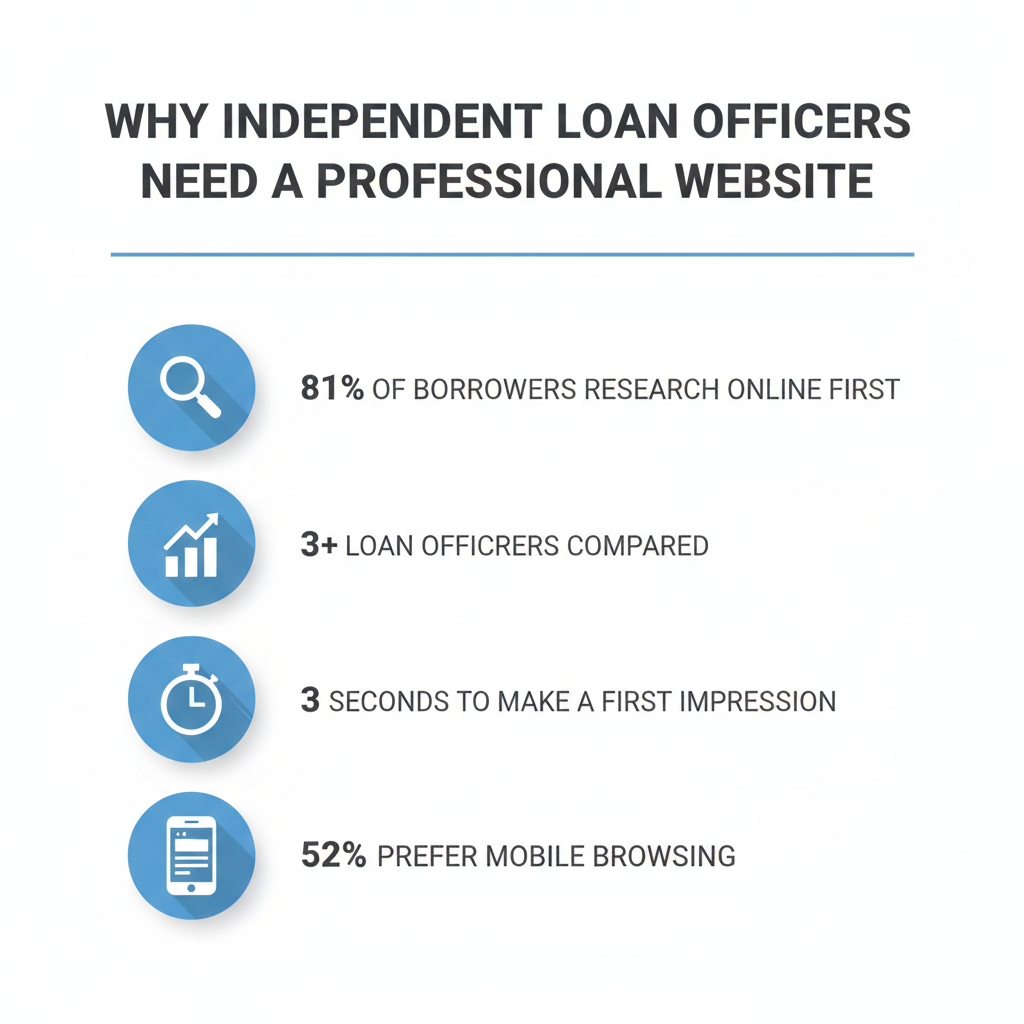
Borrowers compare multiple loan officers before choosing who to work with. If your website looks outdated, loads slowly, or feels generic, they’ll move on to someone else — even if you’re more experienced or offer better service.
A professional site does three important things:
- Builds trust immediately
- Educates borrowers about loan options
- Captures leads automatically
Without those elements, your website is just sitting there.
What Makes the Best Mortgage Website Templates Stand Out
Not all templates are created equal. Some are simply pretty layouts. The best ones are designed with mortgage conversion in mind.
Here’s what to look for.
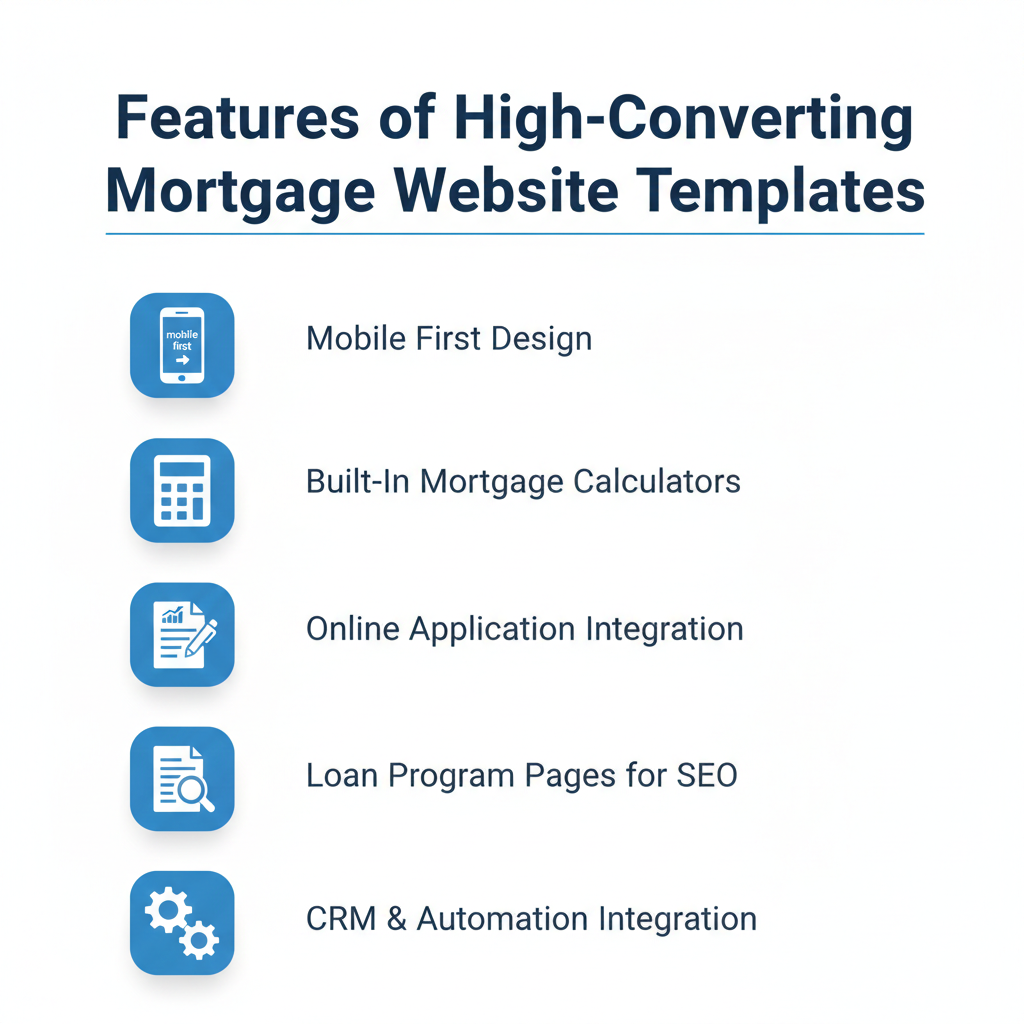
Mobile-First and Fast Loading
More than half of mortgage research happens on a phone. If your site isn’t optimized for mobile, you’re losing potential clients every day.
A strong template should:
- Load in under three seconds
- Adapt perfectly to phones and tablets
- Score high in Google performance tests
- Have simple, clean navigation
Speed affects both user experience and SEO rankings.
Built-In Mortgage Calculators
Borrowers expect tools. When someone is researching rates or affordability, they want quick answers.
Templates that include:
- Mortgage payment calculators
- Refinance calculators
- Affordability calculators
- Amortization tools
…keep visitors engaged longer. The longer someone stays on your site, the more likely they are to convert.
This is one reason modern mortgage website templates outperform generic business templates.
Online Mortgage Application Integration
If someone is ready to apply, they shouldn’t have to hunt for instructions.
A high-converting template includes:
- A simple, user-friendly application form
- 1003-ready structure
- Secure data collection
- Clear “Apply Now” buttons
Reducing friction increases submissions.
Loan Program Pages for SEO
Templates built specifically for loan officers usually include pages for:
- FHA Loans
- VA Loans
- USDA Loans
- Conventional Loans
- Jumbo Loans
These pages are critical for ranking in local searches.
For example, someone searching “FHA loan officer in Phoenix” should be able to land directly on your FHA page. A template structured for SEO makes this possible.
Mortgage Website Templates Designed Specifically for Loan Officers
This is important.
Many independent LOs make the mistake of using general small-business templates. While they may look modern, they lack mortgage-specific functionality.
Templates built for loan officers typically include:
- NMLS display sections
- Compliance-ready disclaimers
- Mortgage-focused CTAs
- Pre-written educational content
- Structured loan comparison layouts
These small details matter.
Instead of spending weeks customizing a generic template, you start with something already aligned with your industry.
Step-by-Step Guide to Choosing the Right Template
If you’re evaluating options, here’s a simple process to follow.
Step 1: Define Your Primary Goal
Are you focused on:
- Purchase leads
- Refinance leads
- First-time homebuyers
- Realtor partnerships
Your template should align with your niche.
For example, if you target first-time buyers, look for a design that emphasizes education and guidance.
Step 2: Review Lead Capture Placement
Strong templates place CTAs:
- Above the fold
- In the header
- After every major section
- In the footer
Look for clear phrases like:
- Book a Free Consultation
- Apply Now
- Check Your Eligibility
A site without strong CTAs is just informational.
Step 3: Check Customization Flexibility
You should be able to:
- Add your logo
- Update your headshot
- Display your NMLS number
- Modify color schemes
- Add testimonials
Personal branding is essential for independent loan officers.
Step 4: Evaluate CRM Integration
Some templates allow:
- Direct CRM connection
- SMS follow-ups
- Automated email sequences
- Lead tracking pipelines
Automation ensures no lead falls through the cracks.
Want to simplify your mortgage journey?
Explore tools, calculators, and homebuyer content at GetMortgageWebsite.com.

How to Turn a Template Into a Lead-Generating Machine
Buying or selecting a template is just the beginning. Here’s how to maximize it.
Add a Strong Personal Bio
People work with people.
Your bio should include:
- Your experience
- Why you became a loan officer
- Who you specialize in helping
- A professional headshot
- Clear contact options
Authenticity builds trust.
Use Testimonials. Strategically
Place testimonials:
- On the homepage
- On loan program pages
- Near application buttons
- Real stories reassure potential borrowers.
Optimize for Local SEO
Add:
- City and state references naturally
- Google Business Profile link
- Location-based keywords
- Structured headings
For example, instead of “VA Loans,” consider “VA Loans in Dallas, Texas.”
This small shift improves visibility.
Keep It Simple
Avoid clutter.
High-performing mortgage website templates are clean, focused, and easy to navigate. Too many menu items confuse visitors.
Think clarity over complexity.
Common Mistakes Loan Officers Make With Website Templates
Let’s address a few pitfalls.
Using generic real estate templatesReal estate agents and loan officers have different needs. Choose a template built for mortgages.
Ignoring mobile optimizationIf it doesn’t look great on your phone, it won’t look good on your client’s.
Overloading with jargonBorrowers don’t need industry language. Keep explanations simple and friendly.
No clear next stepEvery page should guide visitors toward action.
Features That Truly Convert Visitors Into Leads
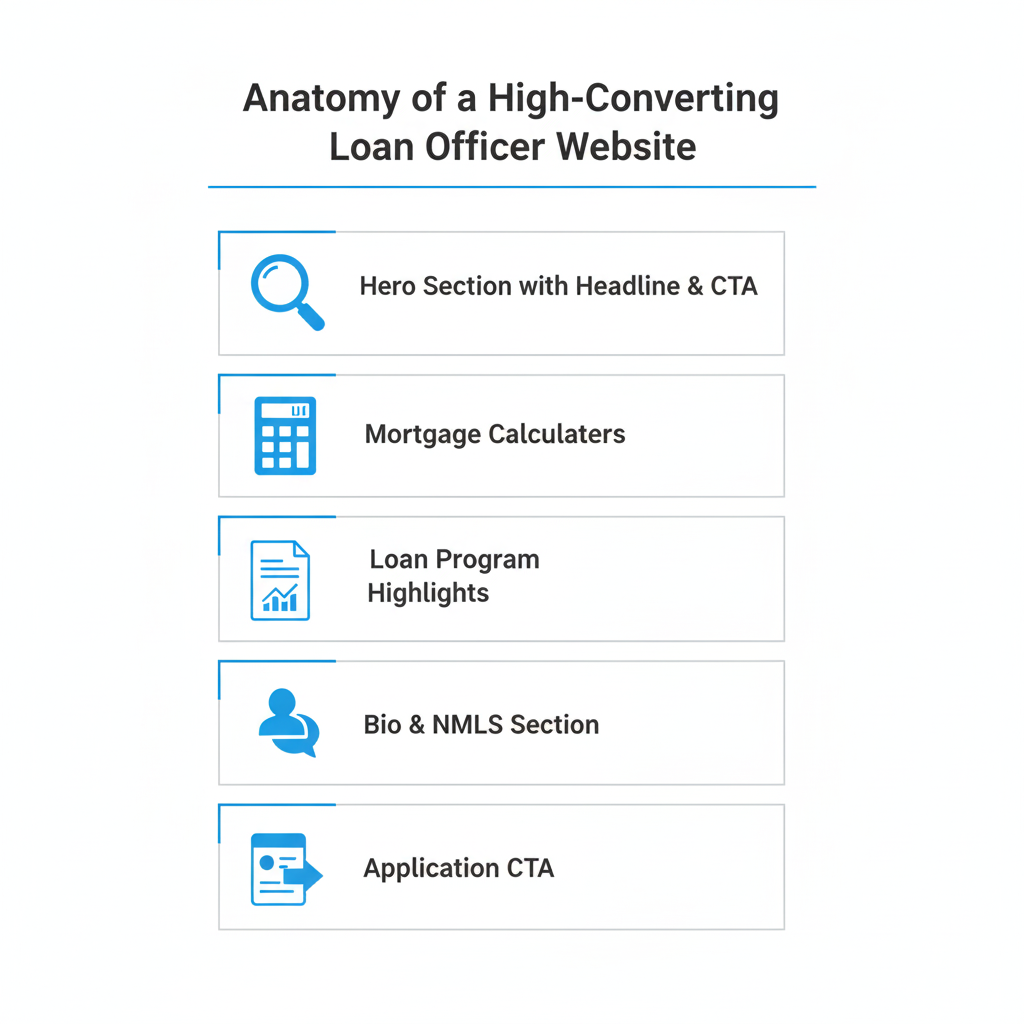
If you want measurable results, prioritize templates with:
- Prominent Apply Now buttons
- Short contact forms
- Click-to-call functionality
- Calendar booking integration
- Secure hosting and SSL
- Fast load times
Conversion is about reducing friction and building confidence.
A professional, modern site signals reliability before you even speak to the borrower.
Launch Your Mortgage Website Fast
Showcase reviews, capture leads, and grow your business all in one place.

Frequently Asked Questions
What is the best type of website template for independent loan officers?
The best templates are specifically designed for mortgage professionals. They include built-in calculators, application forms, loan program pages, and compliance sections that generic templates lack.
How much should a loan officer website cost?
Costs vary widely. DIY templates may be inexpensive but require time and customization. Specialized mortgage templates often cost more but save time and increase conversions.
Do I need a CRM connected to my website?
It’s highly recommended. CRM integration allows automated follow-up through SMS and email, increasing response speed and closing rates.
Can I rank on Google with a template website?
Yes if the template is SEO-structured and you optimize it with local keywords, content, and proper headings.
How long does it take to see results?
When configured correctly and reviewed regularly, AI tools can support compliance rather than hinder it.
How quickly can automation be implemented?
Many features can be live within days, not months.
Conclusion
Your website is often your first handshake with a borrower.
As an independent loan officer, you compete not just on rates but on trust, professionalism, and responsiveness. The right mortgage website templates give you a head start by providing structure, speed, and built-in conversion tools.
Instead of reinventing the wheel with a generic business design, choose a template built specifically for your industry. Focus on clarity, mobile performance, and strong calls to action.
When done right, your website won’t just look professional—it will quietly generate leads for you day and night.
Skip the Tech Headaches
We handle the website. You focus on loans.
🔒 Secure, backed up, and mortgage calculators