
Imagine landing on a mortgage website that feels effortless to navigate. It greets you with a warm, inviting design, instantly builds trust, and guides you naturally toward taking the next step. That’s not just good design — it’s the psychology of mortgage website design at work.
In today’s competitive mortgage landscape, your website isn’t just a digital business card — it’s your 24/7 sales agent. Every color, button, headline, and image either nudges your visitors toward action or sends them searching for a competitor.
So what’s the secret sauce? This article explores the psychology behind mortgage website design, showing you how to craft experiences that not only look great but also convert curious visitors into qualified leads.
Key Takeaways
- 🎨 Color psychology is your silent salesman: the right palette builds trust before a visitor reads a single word
- 📱 Mobile-first is non-negotiable: over 73% of mortgage website traffic comes from mobile devices, and Google ranks you based on your mobile experience
- 🔗 Friction kills conversions simplifying navigation and reducing CTAs to one primary action can increase form completions by over 50%
- ⭐ Social proof drives decisions: real testimonials, star ratings, and NMLS credentials visibly displayed can double your monthly leads
- 📚 Educational content builds trust AND rankings: blogs, calculators, and guides position you as the expert and improve your SEO simultaneously
What if your mortgage website could close deals while you sleep?
That’s not a fantasy it’s what happens when psychology-driven design meets strategic user experience. In a market where borrowers compare three to five lenders before making a decision (Consumer Financial Protection Bureau, 2023), your website is often the first and most critical touchpoint.
This guide breaks down the psychology of mortgage website design: what makes visitors stay, trust you, and ultimately reach out.
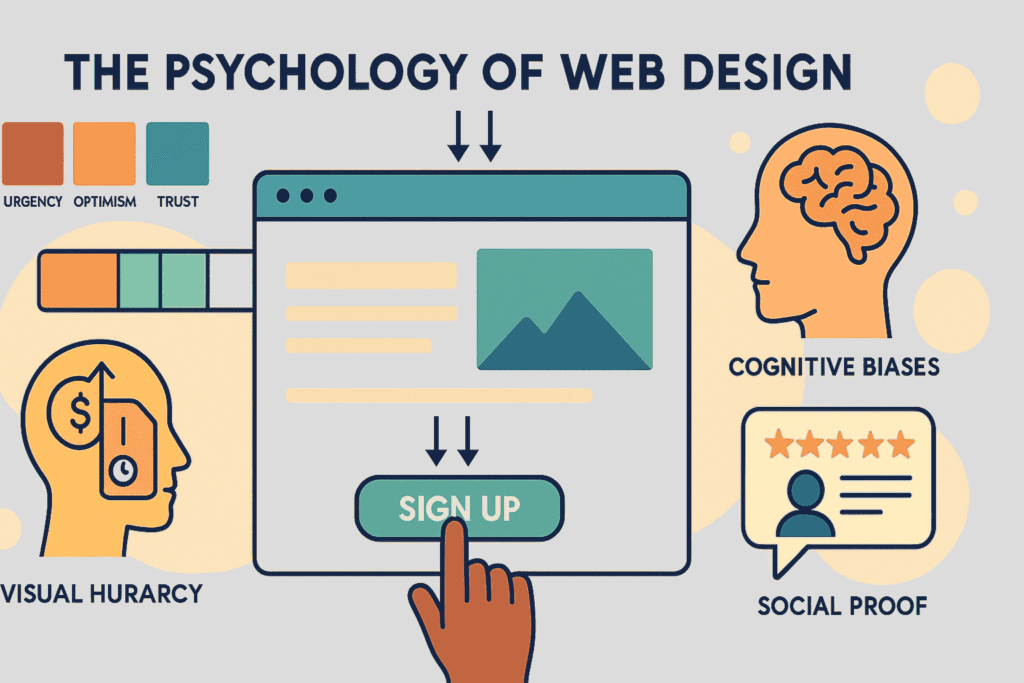
Why Psychology Matters in Mortgage Website Design
Most mortgage websites focus on looking professional. The best ones focus on feeling trustworthy.
Here’s the science behind it:
- Users form an opinion about your website in just 50 milliseconds before they’ve read a single word (Google Research, 2012)
- 75% of consumers judge a company’s credibility based on its website design alone (Stanford Web Credibility Research)
- Websites that trigger positive emotional responses generate 2x higher conversion rates than purely functional sites (Forrester Research)
- 88% of online consumers say they won’t return to a site after a bad experience (Amazon Web Services UX Study)
Ready to Attract More Leads?
Launch your high-performing mortgage website fast no contracts, no hassle.
1. Color Psychology: Building Trust Before a Word Is Read
Color communicates before your headline does. In the mortgage industry, where trust is everything, your color palette sends an immediate signal.
| Color | Psychological Effect | Best Used For |
|---|---|---|
| Blue | Trust, stability, professionalism | Primary brand color, headers |
| Green | Growth, prosperity, new beginnings | Accent color, positive messaging |
| White | Clarity, simplicity, openness | Backgrounds, breathing room |
| Red | Urgency, action | CTA buttons (use sparingly) |
Real-World Example: Rocket Mortgage uses a clean blue-and-white palette across its entire website. This isn’t accidental—their UX team A/B tested multiple color schemes and found that blue-dominant designs produced significantly higher trust scores among first-time homebuyers.
💡 Pro Tip: Use a bold, contrasting color exclusively for your CTA buttons. If your site is blue and white, an orange or green CTA button naturally draws the eye — no gimmicks needed.
2. The Power of First Impressions: Headlines That Hook
Your headline has one job: make the visitor feel understood in under five seconds.
Weak headline:
“Welcome to ABC Mortgage Company”
Psychology-driven headline:
“Close on Your Dream Home in 21 Days — Without the Stress”
The second headline works because it:
- ✅ Addresses a pain point (stress, slow process)
- ✅ Offers a specific, tangible benefit (21 days)
- ✅ Speaks directly to the visitor’s goal (dream home)
A headline that resonates emotionally keeps visitors on the page. One that doesn’t send them to a competitor.
3. Trust Signals: What Actually Makes Borrowers Feel Safe
In mortgage lending, trust isn’t optional; it’s the conversion. Visitors are deciding whether to hand over sensitive financial information. Your design must eliminate doubt.
Proven trust signals to include:
- Real client testimonials with full names, photos, and loan types (not generic quotes)
- Star ratings from Google, Zillow, or
- LendingTree — third-party credibility matters
- Lender licenses and NMLS numbers displayed visibly in the footer
- SSL certificate and security badges near any form or application
- Press mentions or awards
Case Study: How One Broker Doubled Leads With Social Proof
A regional mortgage broker in Texas was generating roughly 40 leads per month from their website. After adding a dedicated testimonials section featuring video reviews from past clients — specifically mentioning loan type, timeline, and outcome — their monthly leads increased to 87 within 90 days. No ad spend increase. Just trust, made visible
4. Mobile-First Design: Non-Negotiable in 2026
If your website isn’t optimized for mobile, you’re invisible to the majority of your audience.
- 73% of mortgage website traffic now comes from mobile devices (BrightEdge Mobile Research)
- Google uses mobile-first indexing, meaning your mobile site determines your search ranking not your desktop version
- Pages that load in under 2 seconds have a 15% higher conversion rate than those taking 4+ seconds (Portent, 2023)
What mobile-first design looks like in practice:
- Large, thumb-friendly CTA buttons (minimum 44x44px)
- Single-column layouts that don’t require horizontal scrolling
- Click-to-call phone numbers (not just listed text)
- Compressed images that load fast on 4G/LTE connections
- Simplified navigation — ideally a hamburger menu with 5 items or fewer
5. The Friction Problem: How Navigation Kills Conversions
Every extra click between a visitor and a conversion is an opportunity to lose them.
A common mistake: mortgage websites with 12-item navigation menus, three competing CTAs on the homepage, and no clear user flow. The visitor doesn’t know what to do, so they do nothing.
The psychology of friction reduction:
- Hick’s Law states that the more choices a person has, the longer they take to decide. Fewer options = faster decisions = more conversions.
- Use a single primary CTA per page (“Get Pre-Qualified Today,” not “Apply Now” + “Learn More” + “Contact Us” + “Get a Rate”)
- Add a sticky header so the CTA is always visible while scrolling
- Use progress indicators on multi-step forms, borrowers are more likely to complete a form when they can see they’re 60% done
Case Study: Simplifying the CTA Flow
A mortgage company in Florida had four different CTAs on its homepage. After a UX audit, they simplified it to one “Check My Rate in 60 Seconds.” Bounce rate dropped by 34%, and form completions increased by 52% within 60 days.
6. Educational Content: The Long Game That Pays Off
Borrowers don’t just want a lender. They want a guide.
Publishing educational content does three things simultaneously:
- Builds trust by demonstrating expertise
- Improves SEO by targeting informational search queries
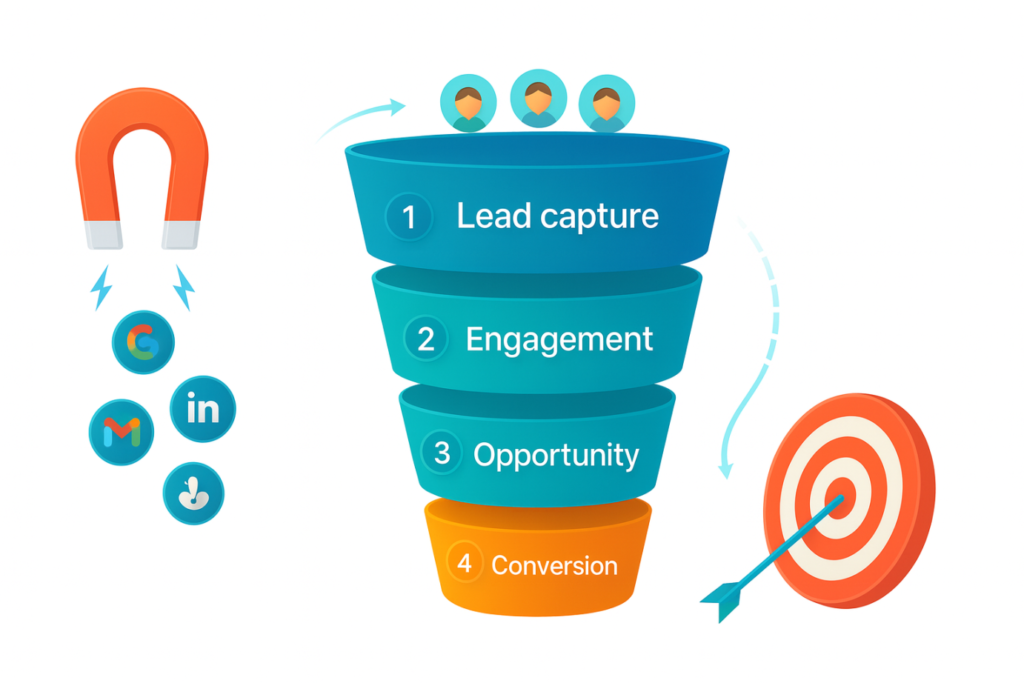
- Captures leads earlier in the buying journey before borrowers are ready to apply
Content types that convert in the mortgage industry:
- Blog posts answering common questions (“FHA vs Conventional: Which Is Right for Me?”)
- Mortgage calculators are interactive tools that keep visitors on your site longer
- First-Time Homebuyer Guides offered as downloadable PDFs (great lead magnets)
- Short explainer videos (60–90 seconds) on topics like PMI, rate locks, or debt-to-income ratios
Ready to Attract More Leads?
Launch your high-performing mortgage website fast no contracts, no hassle.

Frequently Asked Questions
How many CTAs should a mortgage homepage have?
Ideally one primary CTA (e.g., “Get Pre-Qualified”) and one secondary option (e.g., “Talk to a Loan Officer”). Too many competing actions create decision paralysis and increase bounce rates.
Does website design really affect Google rankings?
Yes, indirectly but significantly. Google measures user behavior signals like bounce rate, time on page, and mobile usability. A poorly designed site increases bounce rates, which signals to Google that your content isn’t meeting user needs, ultimately hurting your rankings.
How often should a mortgage website be redesigned?
A full redesign every 2–3 years is a healthy benchmark. However, continuous small optimizations — testing CTA copy, updating testimonials, improving page speed — should happen on an ongoing basis.
What's the most important page on a mortgage website?
The homepage sets the first impression, but the loan programs or pre-qualification page typically drives the most conversions. Both deserve equal design attention.
Are chatbots effective on mortgage websites?
When implemented correctly, yes. A 2023 study by Drift found that websites with AI chat widgets responded to leads 5x faster than those relying solely on contact forms, significantly improving lead-to-application conversion rates.
Conclusion
The psychology of mortgage website design isn’t about manipulation—it’s about meeting your visitors where they are emotionally and guiding them toward a decision they already want to make.
When you combine trust-building color choices, emotionally resonant headlines, frictionless navigation, mobile-first performance, and credibility signals, you create a website that works as hard as you do.
The borrowers are out there. The question is whether your website is giving them a reason to stay.
Ready to Attract More Leads?
Launch your high-performing mortgage website fast no contracts, no hassle.