
Buying a home is one of the biggest financial decisions most people ever make. And right in the middle of that process, you’ll likely encounter two professionals who sound like they do the same thing but actually operate quite differently a mortgage broker and a loan officer. Knowing who does what, who they work for, and how they get paid can save you thousands and a lot of stress.
So let’s clear things up once and for all.
Key Takeaways
- A loan officer works for a single lender and can only offer that lender’s products
- A mortgage broker is independent and shops your loan across multiple lenders
- Loan officers are typically paid a salary plus commission by their employer
- Mortgage brokers earn a commission from the lender, the borrower, or both
- Brokers often provide more loan options; loan officers may offer faster processing within their institution
- Neither is universally better the right choice depends on your financial situation and goals
- Both must be licensed under the NMLS
Who Is a Loan Officer
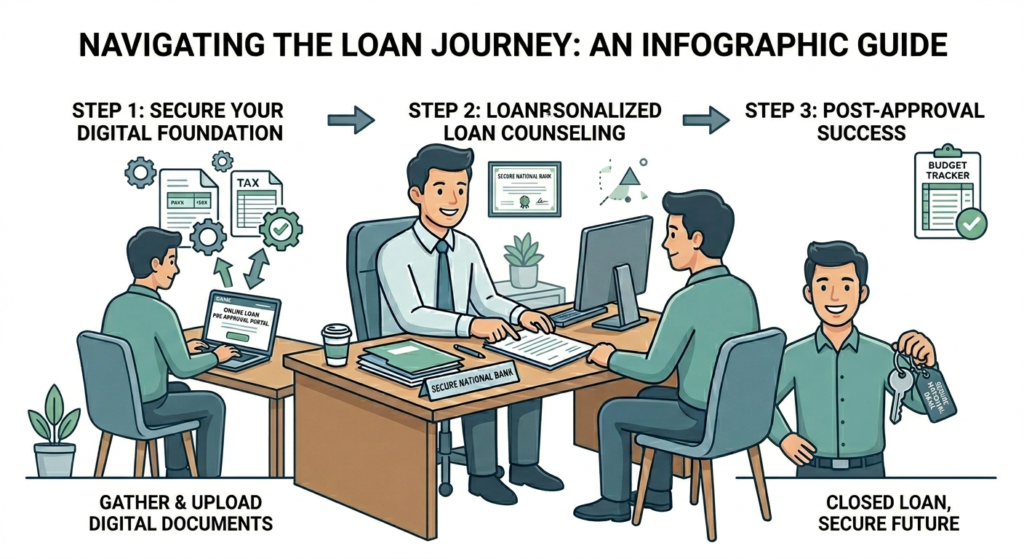
A loan officer, sometimes called a mortgage loan officer (MLO) or mortgage banker, is an employee of a bank, credit union, or mortgage company. Their job is to help you apply for and secure a home loan through the institution they work for.
Because they’re employed by a single lender, loan officers can only offer you the mortgage products that lender carries. If their employer’s rates or terms aren’t competitive for your situation, they can’t shop around on your behalf. What they can do, however, is guide you through that specific lender’s process from application to closing often with deep familiarity and institutional support behind them.
Common employers of loan officers include:
- National banks (Wells Fargo, Chase, Bank of America)
- Regional and community banks
- Credit unions
- Direct mortgage lenders like Rocket Mortgage or loanDepot
Who Is a Mortgage Broker
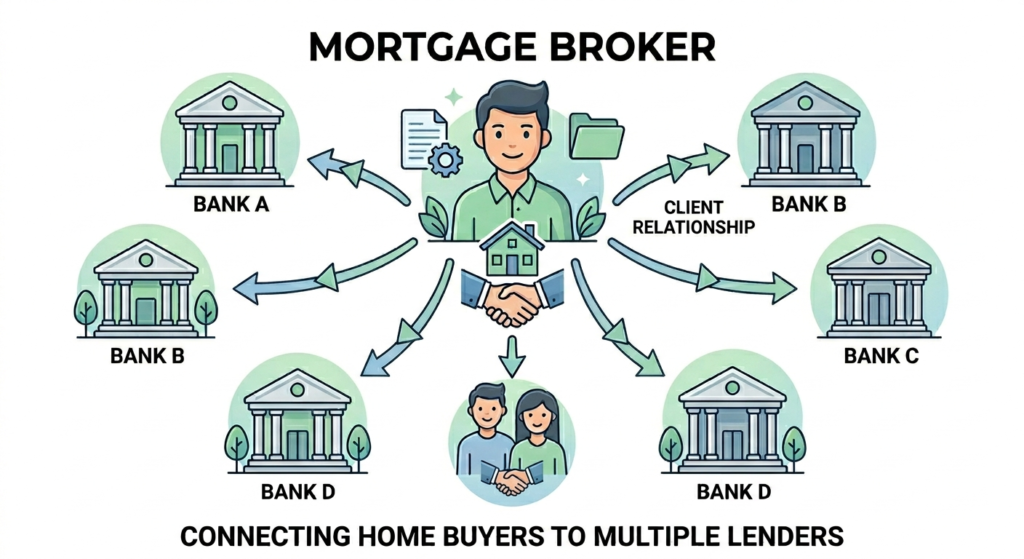
A mortgage broker is an independent professional or a firm of professionals who acts as a middleman between you and a wide network of lenders. Rather than working for one institution, brokers have relationships with dozens of banks, wholesale lenders, and credit unions.
When you work with a mortgage broker, they gather your financial information, assess your needs, and then shop your loan across their lender network to find the most competitive rate and terms for your situation. They handle the paperwork, communicate with lenders on your behalf, and guide you through to closing without being tied to any single product.
This independence is the broker’s biggest selling point. For borrowers with unique financial profiles self-employed income, lower credit scores, or complex assets, a broker’s access to multiple lending options can make a significant difference
Want to simplify your mortgage journey?
Explore tools, calculators, and homebuyer content at GetMortgageWebsite.com.

Mortgage Broker vs Loan Officer A Side-by-Side Comparison
| Feature | Mortgage Broker | Loan Officer |
|---|---|---|
| Who they work for | Independent / multiple lenders | Single bank or lender |
| Lender access | Many (10–50+ lenders) | One institution only |
| Loan product variety | High | Limited to employer’s offerings |
| Licensing | NMLS licensed | NMLS licensed |
| How they’re paid | Lender commission or borrower fee | Salary + commission from employer |
| Best for | Complex situations, rate shopping | Straightforward loans, existing banking relationships |
| Processing speed | Varies by lender | Often faster within their system |
| Accountability | Independent, fiduciary-like role | Employed, tied to employer’s interests |
How Each Professional Gets Paid
This is where a lot of borrowers get confused and sometimes blindsided. Let’s break it down simply.
How Loan Officers Are Paid
Loan officers receive a base salary from their employer, often supplemented by a commission on each loan they close. That commission comes from the lender not directly from you. However, the lender’s profit margins are built into the rate and fees you’re quoted. So while you don’t write a check to the loan officer, their compensation is ultimately priced into your loan.
How Mortgage Brokers Are Paid
Mortgage brokers are typically compensated in one of two ways:
Lender-paid compensation (most common):
The lender pays the broker a fee usually 1% to 2.75% of the loan amount after the loan closes. This fee is built into the wholesale rate the lender offers.
Borrower-paid compensation:
In some cases, the borrower pays the broker directly as a closing cost. This is less common but can sometimes result in a slightly lower interest rate since the lender isn’t factoring in broker compensation.
Federal regulations prevent brokers from being paid by both the lender and the borrower on the same transaction, so there’s a legal safeguard in place.
Licensing and Regulation Are They the Same
Both mortgage brokers and loan officers must be licensed through the Nationwide Multistate Licensing System (NMLS). They must pass background checks, complete pre-licensing education, pass a national exam, and complete ongoing continuing education each year.
The key regulatory difference is oversight. Federal agencies like the OCC or FDIC regulate loan officers employed by federally chartered banks. Mortgage brokers are typically regulated at the state level, which means licensing requirements can vary somewhat depending on where you live.
Either way, you can — and should — verify any mortgage professional’s credentials at nmlsconsumeraccess.org before working with them.
When a Loan Officer Might Be the Better Choice
- Working directly with a loan officer makes a lot of sense in certain situations.
- You already have a strong relationship with your bank and may qualify for loyalty discounts
- Your financial profile is straightforward—strong credit, W-2 income, solid down payment
- You’re looking for speed and want to work within a familiar, established system
- You’re buying new construction where the builder has a preferred lender with incentives
- You want a single point of contact at a well-known institution with in-house processing
When a Mortgage Broker Might Be the Better Choice
A mortgage broker tends to shine when your needs don’t fit neatly into a single lender’s box.
- You’re self-employed or have irregular income that traditional banks scrutinize heavily
- Your credit score is below conventional loan standards and you need more flexible options
- You want someone to do the rate shopping for you across multiple lenders
- You’re a first-time buyer unfamiliar with the mortgage market and want broad guidance
- You’re refinancing and want to make sure you’re getting the most competitive rate available
- Your loan amount is jumbo or falls into a niche category not all lenders cover
A Quick Real-World Example
Say you’re self-employed and your tax returns show a lower income than your bank statements reflect a common scenario for freelancers and small business owners. A loan officer at your local bank might decline you based on standard income documentation rules.
A mortgage broker, on the other hand, can route your application to a wholesale lender that offers bank statement loans or non-QM (non-qualified mortgage) products loan types specifically designed for borrowers like you. Without broker access, you might never have known those options existed.
Launch Your Mortgage Website Fast
Showcase reviews, capture leads, and grow your business all in one place.

Frequently Asked Questions
Can a mortgage broker get me a lower rate than a bank?
Often, yes because brokers have access to wholesale lending rates that aren’t available to the general public. However, it depends on your profile and the lenders in their network. Always compare offers.
Is a mortgage broker safer to work with than a loan officer?
Both are licensed and regulated professionals. Neither is inherently riskier. The key is verifying credentials through NMLS and reading reviews before committing.
Do mortgage brokers charge upfront fees?
Reputable brokers typically don’t charge upfront fees. Their compensation usually comes from the lender after closing. Be cautious of any broker asking for significant money before your loan closes.
Can a loan officer work independently?
A loan officer employed by a bank cannot operate independently. However, some licensed MLOs work as independent mortgage bankers or transition into brokerage roles—the line can blur for experienced professionals.
Who has more loan options a broker or a loan officer?
Almost always a mortgage broker, since they work with many lenders. A loan officer is limited to whatever products their employer offers.
Conclusion
At the end of the day, both mortgage brokers and loan officers play a valuable role in helping people get home loans they just do it in different ways and from different positions. A loan officer brings institutional backing, familiarity with one lender’s process, and often a faster path if you already bank there. A mortgage broker brings flexibility, broader lender access, and the ability to find solutions for borrowers who don’t fit the standard mold.
The smartest move? Understand your own financial situation first, then choose the professional whose strengths align with your needs. And whichever route you take, always compare at least two or three loan estimates before signing anything.
Skip the Tech Headaches
We handle the website. You focus on loans.
🔒 Secure, backed up, and mortgage calculators