
In today’s digital-first world, your website is often the first impression potential borrowers have of your business. A well-designed mortgage website doesn’t just look good; it builds trust, captures leads, and works around the clock to grow your pipeline.
But here’s the challenge: there are dozens of platforms out there, each claiming to be the best. So how do you actually choose the right one?
This guide breaks it all down in simple, practical terms so you can confidently pick a solution that fits your business goals, whether you’re just starting or scaling your mortgage operation.
Key Takeaways
- A great mortgage website should combine design, functionality, and automation
- Built-in CRM and lead capture tools are essential for growth
- Mobile responsiveness is no longer optional
- Automation features can save hours every week
- Choosing the right platform impacts your long-term scalability
Why Your Mortgage Website Matters More Than Ever
Your website isn’t just an online brochure anymore it’s your digital sales machine.
When someone searches for mortgage services, they’re looking for trust, clarity, and ease. If your website feels outdated or confusing, they’ll move on in seconds.
A strong website helps you:
- Build credibility instantly
- Capture leads 24/7
- Educate potential clients
- Streamline communication
- Automate follow-ups
That’s why choosing the right platform is such a critical decision.
What Is a Mortgage Website Builder
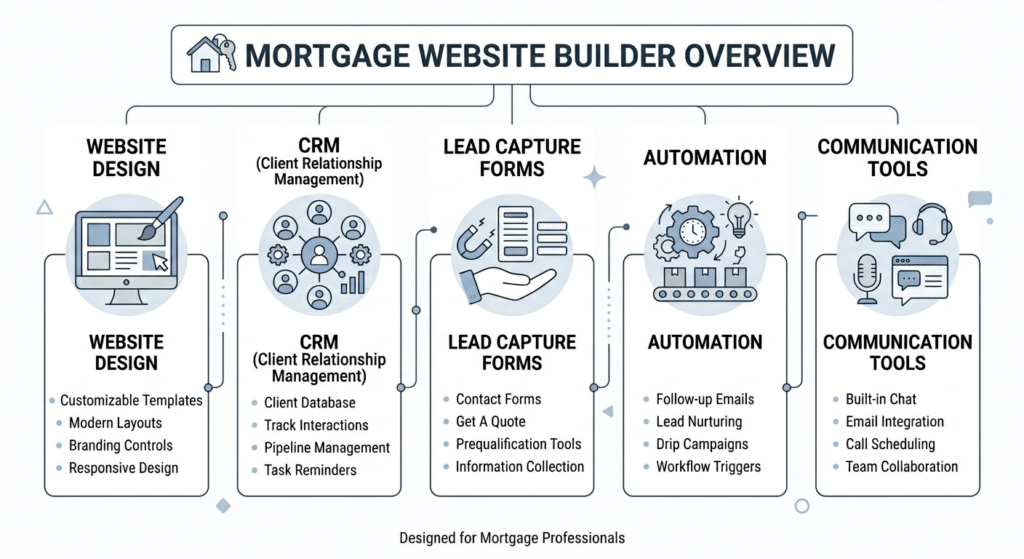
A Mortgage Website Builder is a platform specifically designed to help mortgage professionals create, manage, and optimize their websites without needing advanced technical skills.
Unlike generic website builders, these tools often include:
- Loan application forms
- Mortgage calculators
- CRM integration
- Lead tracking and automation
- Communication tools (SMS, email, chat)
This means you’re not just building a website you’re building a complete business system.
Want to simplify your mortgage journey?
Explore tools, calculators, and homebuyer content at GetMortgageWebsite.com.

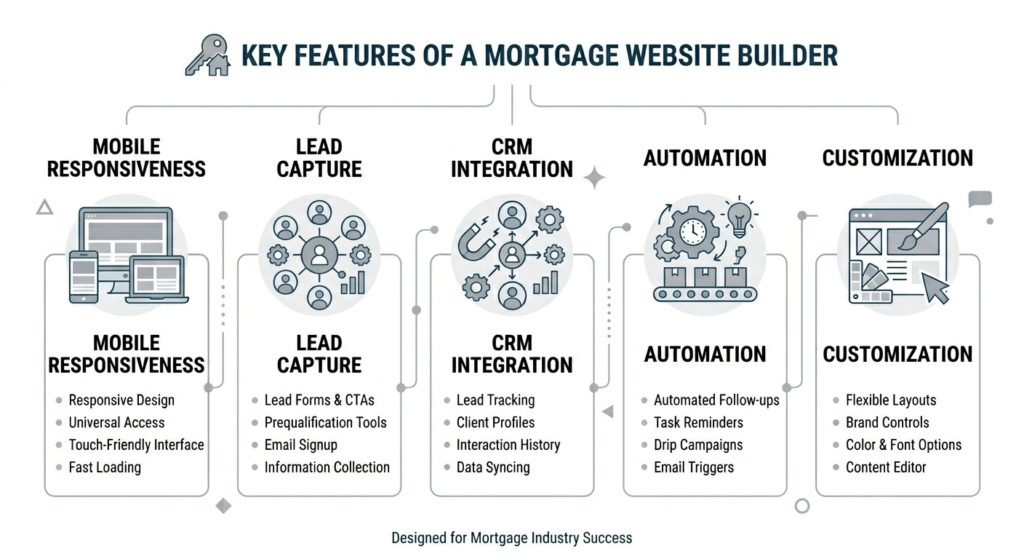
Key Features to Look For in a Mortgage Website Builder
Not all platforms are created equal. Here are the features that actually matter.
Mobile-Friendly Design
Most users will visit your site on their phones. If your website isn’t mobile-optimized, you’re losing leads.
Look for:
- Fast loading speed
- Clean, responsive design
- Easy navigation on small screens
Built-In Lead Capture Tools
Your website should actively convert visitors into leads.
Essential tools include:
- Contact forms
- Pre-qualification forms
- Chat widgets
- Call-to-action buttons
The easier it is for someone to reach you, the more conversions you’ll get.
CRM Integration
A powerful CRM allows you to manage and nurture leads efficiently.
With CRM integration, you can:
- Track client interactions
- Automate follow-ups
Organize contacts - Monitor pipeline stages
This is where many basic website builders fall short.
Automation Features
Automation is what turns your website into a 24/7 assistant.
Look for features like:
- Automated email responses
- SMS follow-ups
- Appointment scheduling
- Review requests
These tools save time and ensure no lead slips through the cracks.
Customization and Branding
Your website should reflect your brand, not look like everyone else’s.
Choose a platform that allows:
- Custom colors and layouts
- Personalized messaging
- Flexible design templates
A unique website builds stronger trust with visitors.
Step-by-Step Guide to Choosing the Right Platform
Let’s break this down into a simple process you can follow.
Step 1: Define Your Goals
Ask yourself:
- Do I want more leads
- Do I need automation
- Am I starting from scratch or upgrading
Your goals will determine what features matter most.
Step 2: Evaluate Ease of Use
You don’t want to spend weeks learning a complicated system.
Look for:
- Drag-and-drop builders
- Simple dashboards
- Clear setup instructions
The easier it is to use, the faster you can launch.
Step 3: Compare Features vs Price
Don’t just look at the cost look at the value.
Some platforms may seem cheaper but require:
- Extra plugins
- Third-party tools
- Additional subscriptions
An all-in-one solution often saves money in the long run.
Step 4: Check Integration Capabilities
Your website should work seamlessly with your tools.
Make sure it integrates with:
- Email systems
- CRM platforms
- Marketing tools
Calendars
This ensures a smooth workflow.
Step 5: Test Before You Commit
Whenever possible:
- Request a demo
- Try a free trial
- Explore templates
Hands-on experience will give you clarity.
Common Mistakes to Avoid
Choosing the wrong platform can cost you time, money, and leads.
Here are some common mistakes:
- Focusing only on design instead of functionality
- Ignoring mobile optimization
- Choosing a platform without CRM integration
- Overlooking automation features
- Picking the cheapest option without considering long-term needs
Avoid these pitfalls and you’ll make a much smarter decision.
How the Right Mortgage Website Builder Supports Growth
A high-quality mortgage website builder does more than just create a website it helps scale your business.
Here’s how:
Better Lead Conversion
With optimized forms and CTAs, you turn more visitors into clients.
Improved Client Experience
Features like live chat and easy navigation make it simple for users to engage with you.
Time Savings Through Automation
Automated workflows reduce manual tasks, freeing up your time for high-value activities.
Data-Driven Decisions
Analytics and reporting tools help you understand what’s working and what’s not.
Practical Example
Imagine two mortgage professionals:
Agent A uses a basic website with no automation
Agent B uses a full-featured platform with CRM and automation
Agent B:
- Responds instantly to leads
- Tracks every interaction
- Automates follow-ups
- Books appointments automatically
Over time, Agent B will close more deals with less effort.
That’s the power of choosing the right platform.
Launch Your Mortgage Website Fast
Showcase reviews, capture leads, and grow your business all in one place.

Frequently Asked Questions
What is the best Mortgage Website Builder for beginners?
The best option is one that offers ease of use, templates, and built-in automation. Look for platforms that don’t require coding and include CRM features.
Do I need a CRM with my website?
Yes. A CRM helps you manage leads, track communication, and automate follow-ups, making it essential for growth.
How much should I spend on a mortgage website?
Costs vary, but investing in an all-in-one platform often provides better value than combining multiple tools.
Can I build a mortgage website without technical skills?
Absolutely. Most modern platforms offer drag-and-drop builders designed for non-technical users.
How long does it take to launch a mortgage website?
With the right platform, you can launch within a few days sometimes even hours if templates are available.
Conclusion
Choosing the right mortgage website builder is one of the most important decisions you’ll make for your business. It’s not just about having an online presence it’s about creating a system that attracts, converts, and nurtures leads automatically.
By focusing on key features like CRM integration, automation, mobile design, and ease of use, you can build a website that works for you 24/7.
Take your time, evaluate your options, and choose a platform that aligns with your long-term goals. When you get this right, your website becomes more than a tool it becomes your most valuable asset for growth.
Skip the Tech Headaches
We handle the website. You focus on loans.
🔒 Secure, backed up, and mortgage calculators